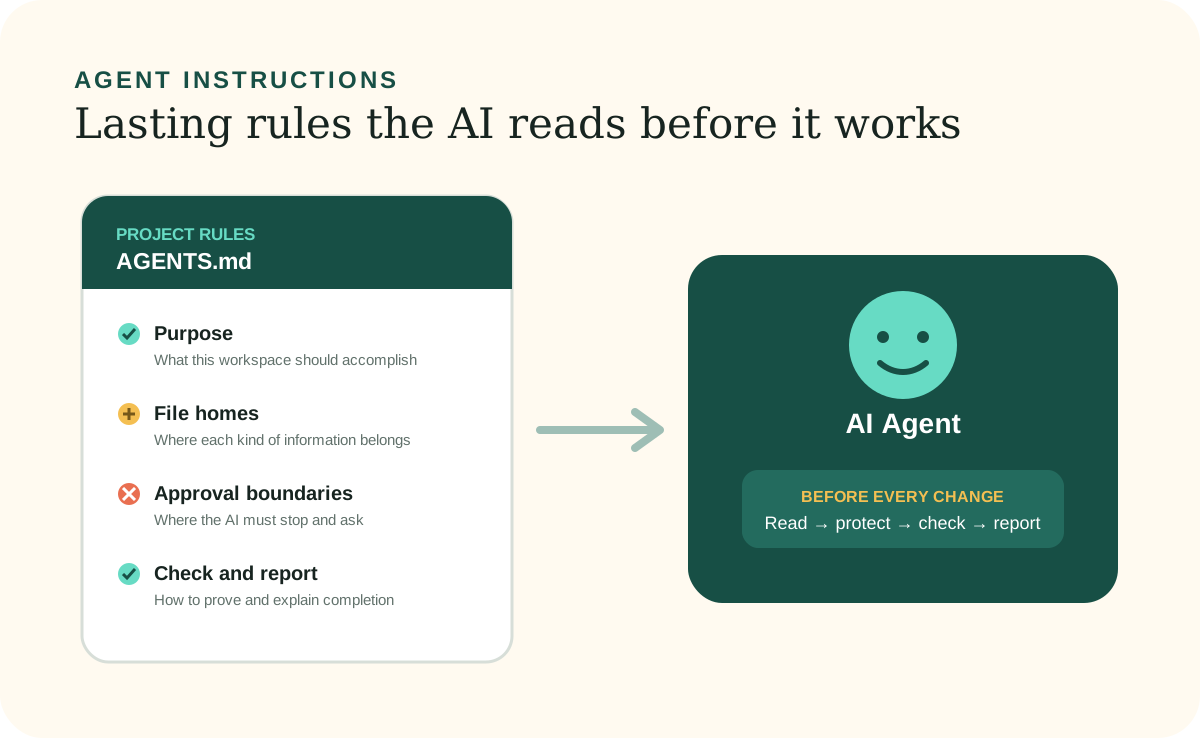
Agent Instructions are lasting, plain-language context that a compatible AI Agent loads when it works in a Desktop Workspace. They explain the workspace's purpose, where information belongs, what the AI should change, when it should stop for approval, and how it should check and report its work.
They are not computer code. They are closer to an operating manual for a capable new assistant: specific enough to guide action, short enough to review, and saved where future conversations can find them.
Why chat is not enough
A conversation is temporary; an instruction file is durable.
An AI Agent can follow a preference you mention in one chat and still miss it in a new chat. That is not the same as an employee deliberately ignoring a policy. The new conversation may simply lack the earlier context.
When a direction should remain true, save it in the project instruction file. OpenAI Codex commonly reads AGENTS.md. Claude Code uses CLAUDE.md. The exact filename matters because the software looks for the file it knows how to load automatically.
What to include
Good instructions define purpose, homes, boundaries, checks, and completion.
The best rules describe what must remain true without trying to predict every possible sentence you might type. They give the AI Agent a stable operating environment while leaving room to handle the details of the current task.
Purpose
What the workspace is for, who uses it, and what a useful result looks like.
Homes
Where current information, instructions, pages, output, history, and backups belong.
Boundaries
Which actions are forbidden or require current approval, such as deleting, sending, publishing, purchasing, or sharing.
Checks and report
How the AI Agent verifies that records and pages agree, and what it explains after the task.
Approval boundaries
Permission to edit a folder is not permission to do everything.
An AI Agent may be able to change many files, but its authority should be narrower than its technical capability. State which actions require a fresh yes from you. A saved rule such as “the user approved customer emails before” is not a substitute for approval of today's messages.
Ask for a preview before consequential actions. The AI Agent should show what it plans to send, publish, delete, purchase, or share, explain the effect, and wait. This keeps judgment with the person who is responsible for the outcome.
Write for outcomes
Say what should become true and what must remain unchanged.
“Update the client” is vague. “Record today's received date for Cedar Works, update the affected pages, and do not prepare or send a follow-up” gives the AI Agent a target, a boundary, and a completion check.
Lasting instructions benefit from the same clarity. Prefer direct rules that a nontechnical owner can inspect. If an instruction needs a page of exceptions, consider whether it is really a focused Skill or a complete Workflow instead of a top-level rule.
Guidance versus enforcement
Instruction files guide the agent; security controls enforce access.
Files such as AGENTS.md and CLAUDE.md provide project context and behavioral guidance. They can strongly shape how an agent works, but a model can misunderstand or fail to follow a written rule. Do not treat prose alone as a hard security boundary.
Use the product's sandbox, file permissions, approval settings, and—where supported—policy rules or hooks to block actions that must not occur without authorization. Keep the written instruction too: it explains the intent, while the technical control limits capability.
Keep them healthy
Review instructions when the real process changes.
Outdated instructions can produce consistent but wrong work. When a policy, file location, approval boundary, or definition changes, update the instruction that owns it and test a normal case plus a difficult case.
Avoid adding rules only because one unusual request went badly. First identify the lasting lesson. Save a concise instruction that prevents the underlying problem, and keep case-specific detail in the relevant record or work summary.
Further reading